

Caorle Old Town
Last updated on September 8, 2026Overview
Behind the hotels and the beach, Caorle keeps a fishing town: narrow lanes, low houses, and facades painted in strong flat colours -- ochre, red, blue, green -- in the manner of Burano.
The colours are not decoration. Fishermen painted their houses in distinct shades so that they could pick out their own from the water, and the practice survived long enough to become the town's signature.
The centre is small -- fifteen minutes end to end -- and organised around one street, Rio Terrà, which is wider and straighter than everything else because it is a filled-in canal.
Quick facts
- Type: Historic Place
- Local name: Centro Storico di Caorle (vedi la pagina italiana)
- Colours you could recognise from the sea: Fishermen painted their houses in distinct flat colours so they could identify their own from the water -- the same reasoning that produced Burano.
- A street that used to be a canal: Rio Terrà, the main street, is a filled-in canal, which is why it is wider and straighter than every lane around it.
Visit responsibly
People live here. The painted houses are homes, not a set -- do not photograph through windows or into courtyards, and keep noise down in the lanes at night.
Caorle's population multiplies several times over in July and August, and the old centre absorbs the whole resort's evening foot traffic. Coming in June or September is materially easier on the town.
Spend in the centre rather than only on the seafront: the old town's small businesses are the ones that keep it a town rather than a backdrop.
Ask for locally landed fish by name. The fleet has shrunk drastically, and what is genuinely local is worth seeking out.
Where it is
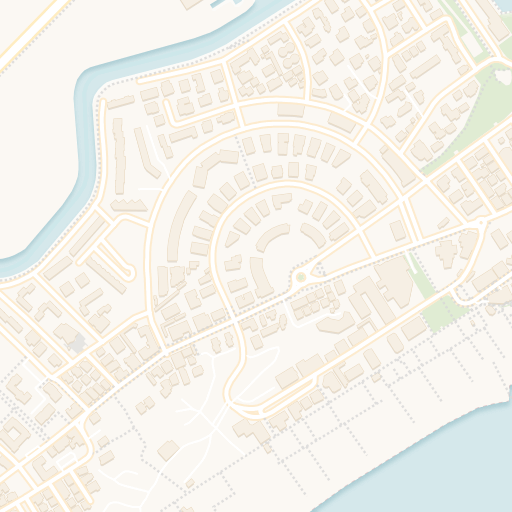


Get directions Open in Apple Maps
© OpenStreetMap contributors · © CARTO · 45.5944, 12.8869
Plan your visit
The old town is free and always open -- it is simply the historic quarter of the town, and people live in it.
It sits between the two beaches, a few minutes' walk from either. Everything is within a fifteen-minute walk, and the streets are pedestrianised.
Allow an hour to walk it properly, more if you stop. Combining it with the cathedral and the walk out along the Scogliera Viva makes a natural half-day.
The centre is flat and level throughout and easily accessible, though the lanes are narrow and crowded in season.
The fish market operates in the morning; most shops keep a long midday closure.
When to visit
Early morning is the best time: the light is good on the painted plaster, the market is working, and the lanes belong to residents.
Evening, during the passeggiata, is the other good time.
June and September avoid the August crush while everything remains open.
Midday in high summer is the worst -- the lanes are full and the colours flatten in overhead light.
Winter is very quiet and much is shut, but the centre is still there and photographs well in low sun.