

Pollenzo
Last updated on October 14, 2026Why visit Pollenzo
Because Alaric was beaten here, and because the same ground now holds a university devoted to food.
Ancient Pollenzo was the Roman city of Pollentia, already cited by Pliny the Elder and founded in the 2nd century BC. In 402 it was the scene of the battle of Pollenzo, where the Visigoths commanded by Alaric were defeated near the city by the Roman general Stilicho and forced to withdraw into Illyria.
Fourteen centuries later, Carlo Alberto di Savoia rebuilt the village and its castle between 1832 and 1848 as a model farm for experiment in agriculture and winemaking. And since 2004 the Agenzia di Pollenzo has housed the Università degli Studi di Scienze Gastronomiche, co-founded by Slow Food.
The friction is that none of this is a ticketed attraction — the university is a working institution and the Agenzia is its campus.
The tactic: come to walk and to eat, not to tour. It is a frazione inside Bra's own boundaries, ten minutes from the centre.
Quick facts
- Type: Historic Place, Site Complex, Neighborhood
- Local name: Pollenzo (vedi la pagina italiana)
- Built: Roman Pollentia founded in the 2nd century BC; the borgo and castle transformed 1832–1848
- Designed by: Transformation promoted by Carlo Alberto di Savoia, King of Sardinia
Visit responsibly
The Agenzia is a university, not a visitor attraction. It has been the seat of the Università degli Studi di Scienze Gastronomiche since 2004. Students work here; the buildings are not open because they are old.
Buy and eat deliberately. Slow Food, which co-founded that university, was founded in Italy in 1986 to campaign for food that is good, clean and fair. Pollenzo is the one place in the Langhe where eating thoughtfully is the explicit local project rather than a visitor's private resolution.
The village is a planned agricultural estate. What Carlo Alberto built between 1832 and 1848 was a podere modello, and much of what surrounds it is still farmland.
There is no Roman site to walk on. Pollentia lies beneath the village, and the battle of 402 was fought near it. Treat the Roman layer as context, not as something to go looking for in a field.
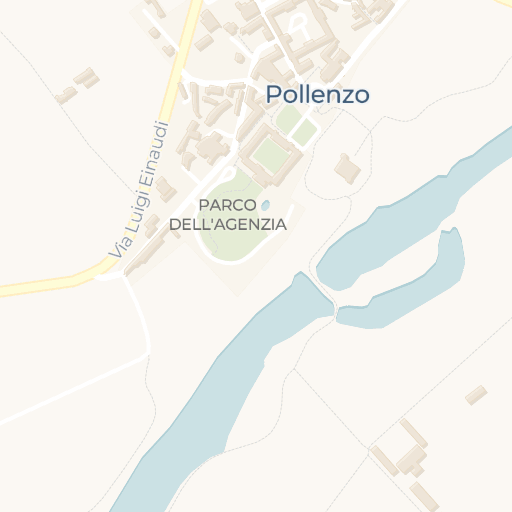
Where it is
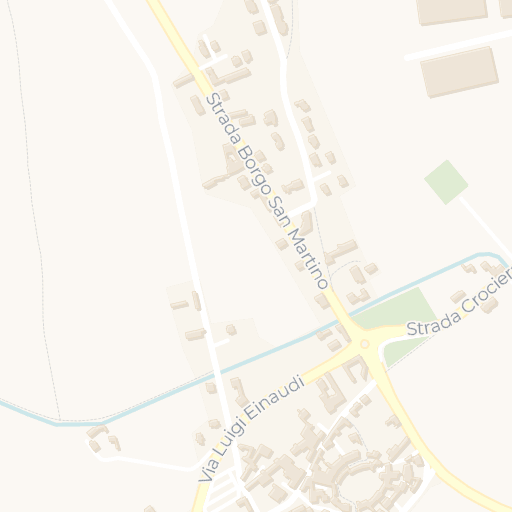
Get directions Open in Apple Maps
© OpenStreetMap contributors · © CARTO · 44.6842, 7.8947
Plan your visit
Where. Pollenzo is a frazione of the comune of Bra, province of Cuneo, inside Bra's own municipal boundaries. Bra stands at 285 metres.
What it is, and is not. It is a village, not a ticketed site. The Agenzia is the campus of a working university, the Università degli Studi di Scienze Gastronomiche, and the castle and borgo are a 19th-century Savoy ensemble you walk through.
Admission and hours. No admission charge or visiting hours are published for the village, and none would apply to a frazione. Anything inside the university is subject to the university.
Getting there. By road from Bra; the sanctuary end of Bra faces Turin, and Pollenzo lies the other way, within the comune.
How long. An hour to walk the borgo and see the Agenzia from outside; longer if you are eating, which is the point of coming.
What there is not. There is no excavated Roman site described in the record and no battlefield marker — the battle of 402 was fought near the city, and Pollentia itself lies under the village.
Verified against Comune di Bra, October 2026.
When to visit
Term time, if the university matters to you. The Agenzia has been the seat of the Università degli Studi di Scienze Gastronomiche since 2004, and a campus out of term is a quiet set of buildings.
Autumn is the Langhe's fullest season and the one when the food that Pollenzo exists to study is actually being harvested.
Mealtimes, frankly. This is a village organised around the study and the serving of food. Arriving between services is the one timing mistake that will spoil the visit.
Pair it with Bra itself. Pollenzo is a frazione of the comune, so the church of Sant'Andrea and the Madonna dei Fiori sanctuary are both nearby — and the sanctuary is at its most interesting in winter, which is Pollenzo's quietest season.
Any season for the history. The Savoy borgo and the Roman name do not vary with the weather.