

Villa Farnese
Last updated on October 9, 2026Why visit Villa Farnese
A cardinal's country house built on the foundations of an artillery fortress, which is why it is a pentagon. Antonio da Sangallo the Younger and Baldassare Peruzzi had designed a rocca here with each face canted inward so defenders could rake anyone trying to scale it, and bastions at every corner. The fortress got as far as its foundations. A generation later Vignola was told to put a villa on them, and rather than disguise the shape he worked with it: a five-sided block in reddish gold stone, with a perfectly circular colonnaded courtyard cut into the middle of it. The United States copied the plan for the Pentagon.
Visit if you:
- want to see a constraint turned into the best idea in the building
- are interested in Mannerism as an argument rather than a label -- this is the reaction against the High Renaissance, twenty years on
- like painted rooms with programmes: the frescoes were designed by humanists in the cardinal's own court
- care about maps -- the Sala del Mappamondo shows the whole known world as it stood in 1574
Skip it if you:
- are expecting furnished rooms: the main villa is empty, and the Farnese art collection went to Charles III of Spain and is in Naples
- want the famous water-staircase garden -- the casino and its gardens are a residence of the President of the Italian Republic, not part of the ordinary visit
- cannot manage stairs: the approach from the town is a sequence of terraces and double staircases before you reach the door, and the building has five floors
Quick facts
- Type: Palace, Mansion
- Local name: Palazzo Farnese (vedi la pagina italiana)
- Visitor access: Open to visitors
- Built: foundations c. 1515-1530; villa 1559 onward
- Built for: Cardinal Alessandro Farnese
- Designed by: Giacomo Barozzi da Vignola, on fortress foundations by Antonio da Sangallo the Younger and Baldassare Peruzzi
- Architectural style: Renaissance and Mannerist
Visit responsibly
The main villa is empty, and that emptiness is the historical fact rather than a gap in the display: the Farnese collection went to Charles III of Spain and is in Naples. What remains is the fabric itself -- frescoed surfaces floor to coffered ceiling in rooms like the Sala dei Fasti Farnesiani, and the painted grotesques of the courtyard loggia. With nothing in the rooms to look at but the walls, the walls take all the contact.
The Sala del Mappamondo's map is a document as much as a decoration: the known world exactly as it stood in 1574. Light and touch do to painted cartography what they do to any pigment, and there is no second copy.
The casino and its gardens are a home of the President of the Italian Republic. The restrictions around them are not a heritage management decision.
Caprarola is a small town whose main street was built to end at this building, and which sees visitors arrive, climb, and leave. Eating and buying in the town rather than only at the top of the stairs is what puts the visit into the place that was planned around it.
Where it is
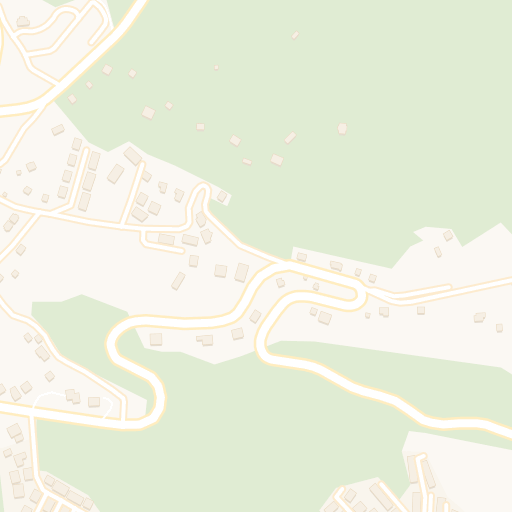
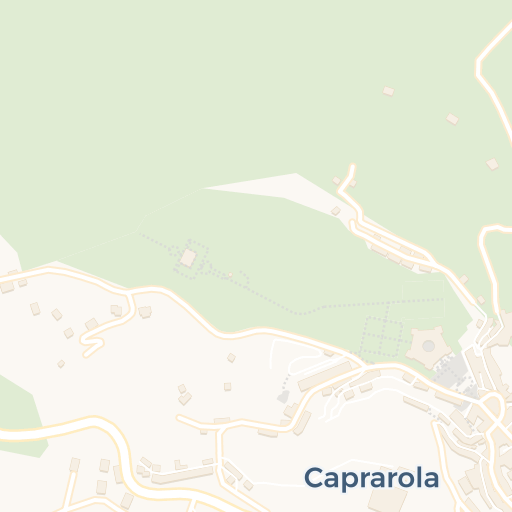
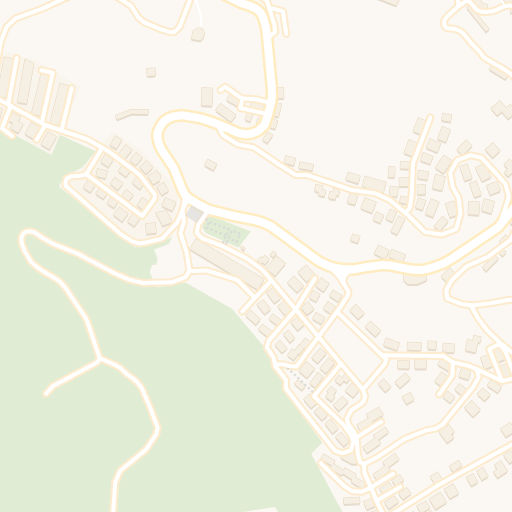
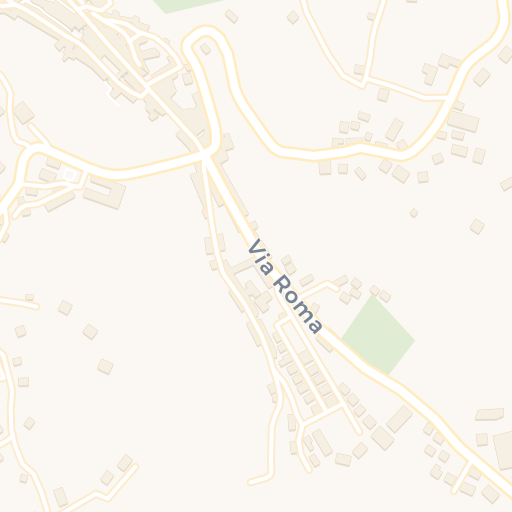
Get directions Open in Apple Maps
© OpenStreetMap contributors · © CARTO · 42.32883, 12.2368
Plan your visit
The Villa Farnese is a property of the Republic of Italy. The main villa, which stands empty, is open to the public; the casino and its gardens at the top of the park are one of the homes of the President of the Italian Republic and are not part of an ordinary visit.
No admission price or opening hours are quoted here, and that is deliberate. The villa does not appear among the sites listed by the Direzione regionale Musei Lazio, and the dedicated ministry domain for it did not respond when this page was written, so there is no operator source to quote and inventing one would be worse than the gap. Confirm hours and tickets before travelling.
What can be said about the visit is structural. The approach from Caprarola's main street climbs through three staged flights -- the tuff-cut basement terrace, a curved external double stairway, then a formal double staircase to the entrance on the Piano dei Prelati -- and the interiors run over five floors above that, with the piano nobile reached by spiral stair from the courtyard. Allow for the climb.
When to visit
April to June and September to October suit this building best. It sits high above Caprarola facing the wooded Monte Cimini, so it is cooler than the Lazio plain, and the approach -- three staged flights of steps up from the town -- is unpleasant in August heat and fine in spring. The interiors are the substance of the visit and they are frescoed rooms rather than daylit galleries, so weather matters less once you are inside than on the way up. The two parterre gardens cut into the hillside are at their best in late spring, and the chestnut woods beyond them in autumn colour. Note that the casino and its water-staircase garden are a residence of the President of the Republic and are not part of an ordinary visit in any season, so do not plan a trip around them.