

Galleria Borghese
Last updated on October 5, 2026Why visit Galleria Borghese
The draw
Bernini's Apollo and Daphne is in the room it was carved for, and so are The Rape of Proserpina and David. Add six Caravaggios, Canova's Pauline Borghese, a Raphael and a Titian, and you have the density of a national collection inside a building you can cross in a minute — one cardinal's taste, still in his own villa.
The problem when visiting
You cannot walk in. Entry is by timed slot, the slots hold 180 people, booking is compulsory for every ticket type including the free ones, and tickets are neither refundable nor changeable. In spring and autumn the slots go days ahead. More visitors are turned away from this gallery for not having booked than from anywhere else in Rome, and most of them are standing in a free public park at the time, which is the source of the confusion — Villa Borghese is the park, the Galleria Borghese is the museum inside it.
The tactic
Book before you book anything else in Rome, and treat the slot as the fixed point the rest of the day moves around. Take the first slot of the day for the quietest rooms. If a day shows sold out, last-minute tickets are released from minute 20 of each hour — a shorter ninety-minute visit, but a real one. If you are between 18 and 25, the ticket is €2 instead of €16, so bring the document that proves it.
Skip it if you:
- Have not booked and are leaving Rome tomorrow. There is no standby queue. Spend the time in the park, which is free and genuinely worth it, and keep the gallery for a trip you can plan around.
- Are travelling with small children. Two fixed hours, no re-entry, and rooms where nothing may be touched. The Bernini groups will hold a five-year-old for ten minutes; the remaining hundred and ten are the problem.
- Want to see the collection at your own pace. You will be admitted with a slot and expected to leave with it. If a museum for you means drifting back to one painting three times, this building is organised against you.
- Are short of time and choosing between this and the Vatican Museums or the Capitoline. Those absorb a walk-in; this does not. On a compressed trip, the gallery that requires a reservation weeks out is the wrong one to gamble a morning on.
- Came for antiquities. The Borghese Roman sculptures went to the Louvre in 1808 and never came back. What is here is overwhelmingly Baroque sculpture and Renaissance painting.
Quick facts
- Type: Museum, Mansion, Historic Place
- Local name: Galleria Borghese (vedi la pagina italiana)
- Admission: €2–€16
- Reservation: Required — book before arriving
- Typical visit: About 2 hours
- Built: 1613–1616
- Built by: Cardinal Scipione Borghese
- Built for: A suburban villa for the Borghese art collection
- Architectural style: Late Renaissance / early Baroque
- Timed entry, two hours: Slots start on the hour and the visit lasts two hours. A maximum of 180 people enter per slot.
- Booking is compulsory: For every ticket type, free admission included. Without a reservation there is no entry.
Visit responsibly
The 180-person cap is a conservation measure, not a queue-management trick. This is a small villa holding marble, panel paintings and eighteenth-century painted vaults in rooms that open directly into each other. Humidity and body heat are the pressure. Keeping to your slot and leaving when it ends is what makes the cap work — the visitor who lingers past two hours is the reason someone else's slot is crowded.
Do not touch the sculpture, and stand back further than feels necessary. Bernini's groups are carved to be walked around, which puts visitors closer to them than in most galleries, and Apollo and Daphne has passages of marble thinned to a few millimetres at the leaves and fingers. The barriers are set where they are because of exactly that.
Buy from the operator. Resale for this gallery is a genuine problem precisely because booking is compulsory and slots sell out: third-party sites resell timed slots at a markup, and a ticket bought that way cannot be changed or refunded any more than a direct one can. The official site and the telephone line are the two channels the gallery itself names.
Use the park as the park. Villa Borghese absorbs the visitor pressure that the gallery cannot, and it is free. Arriving early and waiting in the gardens rather than in the entrance hall is better for the building and better for the wait.
Where it is
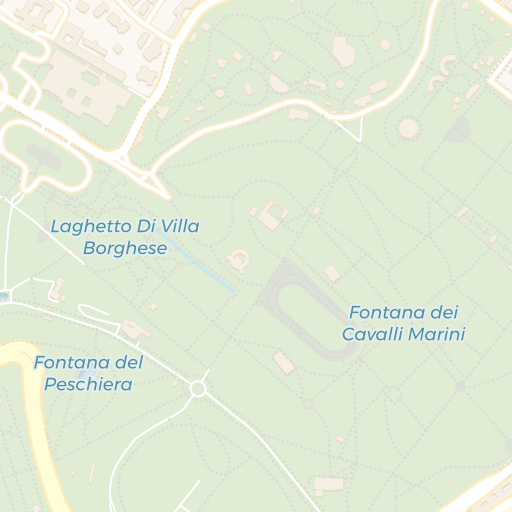
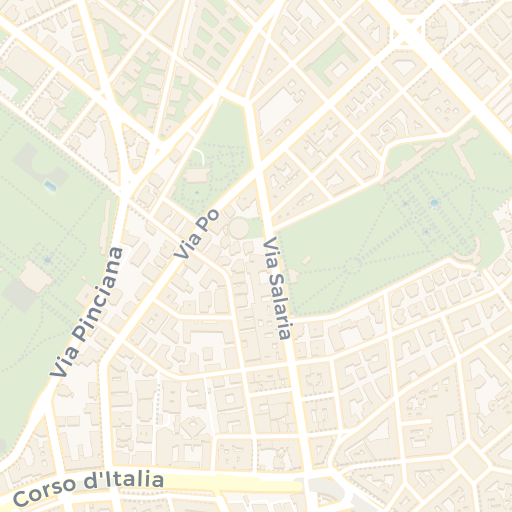
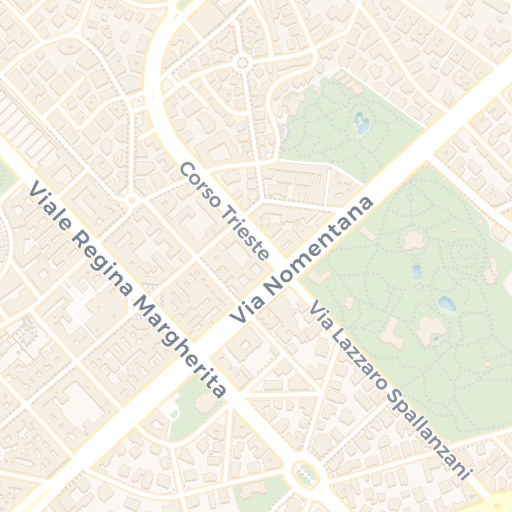
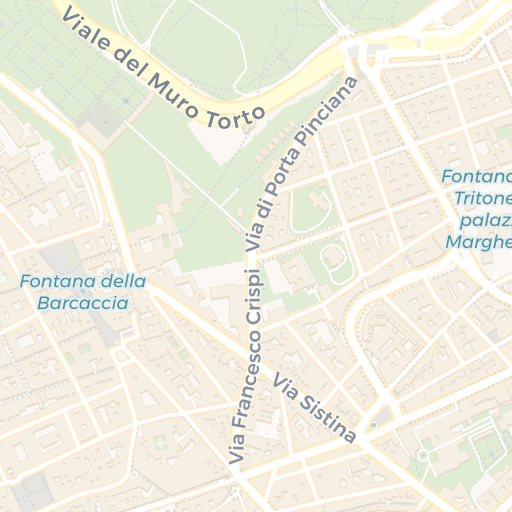
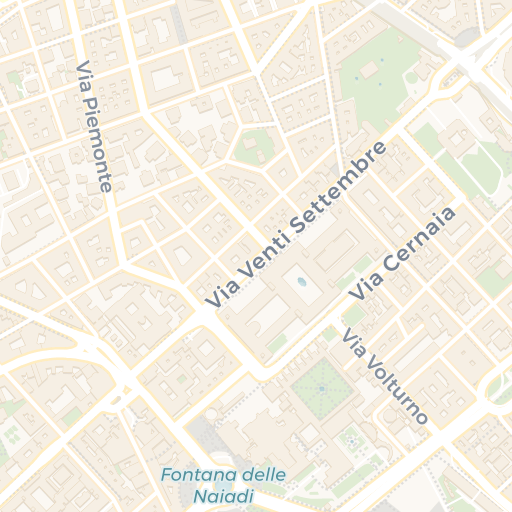
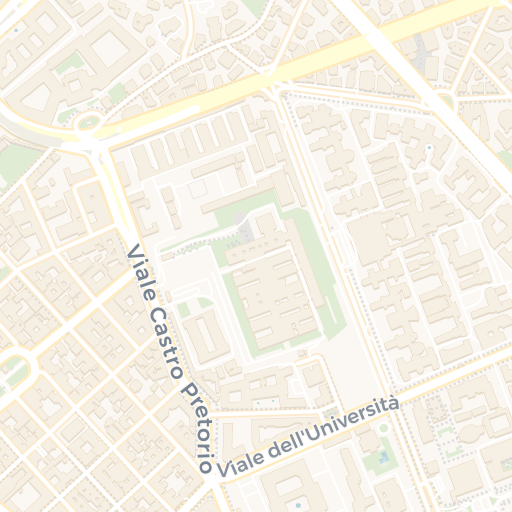
Get directions Open in Apple Maps
© OpenStreetMap contributors · © CARTO · 41.9142, 12.4922
Plan your visit
Admission: €2–€16 · Full €16, reduced (18–25) €2, under-18s free. A €2 booking fee applies to every ticket type, including the free ones.
Prices verified September 2026
Booking is compulsory, and that includes free tickets
The operator states this in two places and it is the single most important fact about visiting: a reservation is required for every ticket type. Being entitled to free admission — under 18, or any of the exempt categories — does not exempt you from booking. Arriving without a reservation means not getting in, whatever you are entitled to pay.
A booking fee of €2 applies on top of the ticket, again including on free tickets, though certain categories are exempt from the fee itself. Tickets can be bought online, or by telephone on +39 06 32810, Monday to Friday 9:30 to 18:00. A single purchase is limited to five tickets.
Timed slots, and a two-hour visit
Entry slots begin on the hour, and the visit lasts two hours — the exception being the final 17.45 slot. Each slot admits a maximum of 180 people. Admission is staggered and happens only at the top of the hour, so a queue forming just before a slot starts is normal and generally short; it is not a sign that anything has gone wrong.
Last-minute tickets exist and are shorter. They are released only from minute 20 of each hour, and the visit they buy is one hour thirty rather than two. Worth knowing if a day is otherwise sold out, and worth not confusing with a standard ticket.
Ticket & Pass Decision Matrix
| Option | Cost | What it gets you | Queue and booking | Verdict |
|---|---|---|---|---|
| Standard entry | €16 + €2 booking | The whole gallery, both floors, for a two-hour slot | Book ahead; slots go days out in spring and autumn | The default. There is no cheaper way in for an adult over 25. |
| Reduced, 18–25 | €2 + €2 booking | Identical access to the standard ticket | Same booking rule; bring proof of age and status at the door | The best value at any major Roman museum. Open to EU citizens and, on reciprocity terms, residence-permit holders. |
| The free zone | €0 | Villa Borghese park — the gardens, the terraces, the Pincio views. Not the gallery. | None. Open, unticketed, no reservation. | Where to wait before your slot, and the thing most people mistake for the gallery. |
| Roma Pass | Not published | Covers more than 100 Rome attractions and public transport across 48 or 72 hours | Pass holders book through a dedicated channel — romapass@tosc.it — not the ordinary flow | Worth it only if you are using it across several sites. Note the separate booking route: the pass does not remove the compulsory reservation here. |
| Third-party resellers | Marked up | The same timed slot, at a higher price | Often presented as “skip the line”, which is meaningless where everyone enters by slot | Avoid. A resold ticket is no more refundable or changeable than a direct one, and the operator names only two channels: its own site and its telephone line. |
Two turnstile rules to carry in your head. First, no reservation means no entry, and that applies to a free ticket exactly as it applies to a €16 one. Second, a purchased ticket is neither refundable nor changeable, so the date and slot you choose are the date and slot you are committed to.
What is free
The park is free. The gallery is not. The two share a name and an address, and the distinction is the most common misunderstanding about this place. Villa Borghese — the gardens, the lake, the Pincio terrace and its view over Piazza del Popolo — is a public park, open and unticketed, with no reservation of any kind. The Galleria Borghese is the ticketed museum inside it.
Free admission to the gallery itself exists but is narrow, and it never comes without a booking: under-18s enter free, as do scholars and researchers with attestation from a school, university, academy, research or cultural institute, or a ministry body. Both still require the compulsory reservation, and generally the €2 booking fee with it.
Prices
Full admission is €16. The reduced ticket for 18- to 25-year-olds is €2, which is one of the steepest age discounts at any major Roman museum and applies to EU citizens and to holders of a valid residence permit on reciprocity terms. Annual membership runs €90 for the standard card, €40 for the 18–30 card, and €65 each for the two-person card.
Days and closures
The gallery is open Tuesday to Sunday. The last entry is at 17.45, and the ticket office opens at 8.30 and closes one hour before the museum. It is closed on 25 December and 1 January.
Practical limits worth knowing before you arrive
Tickets are neither refundable nor changeable. Given that slots sell out days ahead and the visit is fixed to a two-hour window, this is a real commitment rather than boilerplate.
The cloakroom takes only trolleys of cabin size, for the duration of the visit, and only while space lasts. Anything larger is a problem to solve before you come rather than at the door.
Verified against Galleria Borghese, September 2026.
When to visit
Book first, then choose the time. This is the one Roman museum where the calendar decides the visit rather than the other way round: slots are capped at 180 people and sell out days ahead in spring and autumn. The best month you can get into beats the ideal month you cannot.
The first slot of the day is the quietest, and the 17.45 slot is the odd one out. It is the only slot that does not run a full two hours, so it is the wrong choice for a first visit and a reasonable one for a return.
Weekdays over weekends, and avoid the free-admission days if you want space. State museum free days concentrate demand into a building that cannot expand, and the 180-person cap still applies.
Any season works inside. The collection is indoors and climate-controlled, so unlike the Forum or the Colosseum this is a good use of a hot August afternoon or a wet January morning. The park around it is at its best in April and May and again in October.