Croatia
Discover Croatia
Introduction
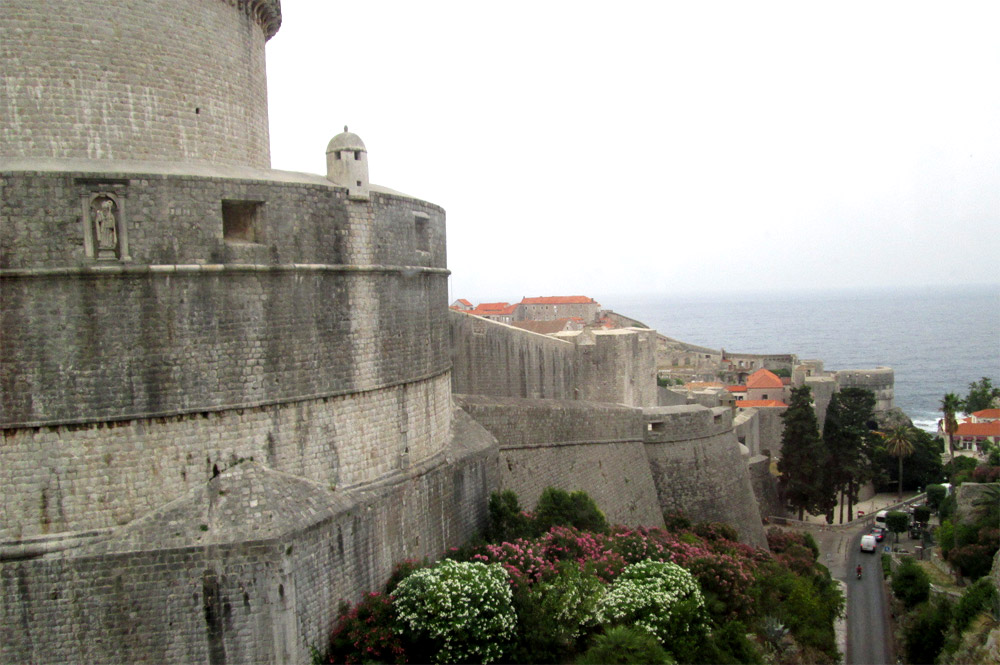
Croatia is a crescent of a country: a long Adriatic coast with more than a thousand islands, 48 of them inhabited, wrapped around a mountain spine and opening in the north-east onto the Pannonian plain. Within its 56,594 square kilometres it holds Roman, Venetian, Habsburg and socialist layers side by side -- an emperor's retirement palace that became the centre of Split, a walled republic at Dubrovnik, an amphitheatre at Pula -- and a population of nearly 3.9 million that joined the European Union in 2013 and the euro and Schengen in 2023.
The coast is where most visitors go and where the country divides into its two regions on this site: Istria, the peninsula in the north-west with its Italian bilingualism and hill towns, and Dalmatia, the long southern coast of islands, Split and Dubrovnik. Behind the coast lie the karst mountains, half the country's area, with the lakes and waterfalls of Plitvice and the canyon of the Krka; behind them, Zagreb and the river country of the Sava and Drava, which see a fraction of the coast's visitors.
Tourism is between a tenth and a seventh of the economy and it comes in a wave: 20.7 million arrivals in 2025 against a population of under four million, most of them in July and August, most of them on the coast. That wave, and the bora wind that can close the coastal roads in an afternoon, are the two facts to plan around.
Do I need to change money?
No. Croatia adopted the euro in 2023, when it also joined the Schengen Area, so there is no currency to change and no border check arriving from Slovenia or Hungary.
When is the best time to visit the coast?
Late May to June and September: the sea is warm, the ferries run to their summer timetable and the old towns are busy without being full. July and August bring most of the year's 20.7 million arrivals.
What is the bora?
A cold north-east wind that comes down from the mountains suddenly, on clear days, hardest in winter; it has reached 220 km/h near Senj and closes the coast road and the Velebit crossings to some vehicles. The Croatian Auto Club's daily road page says when.
How much is Plitvice?
It depends on the month and the hour: an adult day ticket is 10 euros from November to March, 23 in April, May and October, and in June to September 40 euros before 4 p.m. (3 p.m. in September) or 25 after. Children 7 to 18 pay less; the figures are the park's 2026 price list.
Can I swim at the Krka waterfalls?
Only in the specially marked places; the park's rules forbid it elsewhere, along with walking on the tufa barriers, which are the living rock the falls are made of.